Should Dharmendra Pradhan Resign?
In every parliamentary democracy, accountability is the cornerstone of good governance. While ministers are not expected to personally supervise every official action, they are expected to accept political and moral responsibility for serious failures within their departments.
This constitutional convention is known as Ministerial Moral Responsibility.
The recent wave of exam paper leaks, cancellation of national examinations, and growing frustration among students has reignited the debate on whether Union Education Minister Dharmendra Pradhan should accept moral responsibility.
What is Ministerial Moral Responsibility?
Ministerial Moral Responsibility is a constitutional convention under the Parliamentary System of Government.
It means that:
A minister is accountable for the functioning of his or her ministry.
Even if the minister has no direct involvement in an administrative failure, they are expected to accept political responsibility.
This accountability helps preserve public trust in democratic institutions.
Unlike criminal liability, moral responsibility is based on ethics, democratic conventions, and constitutional values rather than legal guilt.
Constitutional Basis
Although the Constitution of India does not explicitly use the term "Ministerial Moral Responsibility," the concept flows from:
Article 75(3) – Council of Ministers is collectively responsible to the Lok Sabha.
Principles of the Westminster Parliamentary System adopted by India.
Democratic conventions followed across parliamentary democracies.
This makes ministers answerable not only to Parliament but also to the people.
Lal Bahadur Shastri: The Gold Standard of Accountability
One of India's finest examples of moral responsibility came in 1956.
Following the Ariyalur Railway Accident, which claimed hundreds of lives, then Railway Minister Lal Bahadur Shastri resigned.
Importantly,
He was not personally responsible for the accident.
There was no allegation of corruption against him.
Yet he believed that the minister should accept responsibility for failures within the ministry.
His resignation is still remembered as one of the highest examples of democratic ethics and political accountability.
The Current Debate: Repeated Paper Leaks
India has witnessed repeated controversies over examination integrity in recent years.
Several examinations have faced allegations of:
Paper leaks
Cheating networks
Malpractice
Cancellation of exams
Loss of students' trust
These incidents affect lakhs of aspirants who spend years preparing for competitive examinations.
Students have increasingly demanded:
Strong anti-paper leak mechanisms
Transparent investigations
Institutional reforms
Political accountability
Why is Dharmendra Pradhan Being Asked to Take Moral Responsibility?
Many students, activists, and civil society groups argue that when repeated failures occur under a ministry, political accountability must accompany administrative action.
The demand is not necessarily an allegation of personal involvement.
Instead, it is based on the democratic principle that:
"Leadership includes responsibility for institutional failures."
Several student organisations have therefore demanded that Union Education Minister Dharmendra Pradhan accept moral responsibility over repeated examination controversies.
Sonam Wangchuk's Stand
Education reform activist Sonam Wangchuk has publicly expressed concern over the repeated examination irregularities affecting students.
He emphasized that:
Students deserve fairness.
Public confidence in examinations must be restored.
Governments should uphold accountability and transparency.
His intervention brought wider public attention to the issue of educational governance.
CJP's Demand
The Cockroach Janatha Party (CJP) has also demanded that Union Education Minister Dharmendra Pradhan take moral responsibility over repeated examination controversies.
According to CJP, accepting responsibility would strengthen democratic accountability and reinforce public trust in educational institutions.
A minister may not be legally guilty but can still be expected to accept moral responsibility.
Why Accountability Matters
A strong democracy depends upon:
Public trust
Transparent governance
Ethical leadership
Ministerial accountability
Constitutional conventions
When leaders voluntarily accept responsibility, citizens develop greater confidence in democratic institutions.
Conclusion
The discussion around Ministerial Moral Responsibility goes beyond one individual or one government. It raises a broader question about how democratic accountability should function when institutional failures affect millions of citizens.
The demand that Union Education Minister Dharmendra Pradhan accept moral responsibility over repeated paper leak controversies reflects a political and ethical argument made by some student groups, activists, and organisations. Others argue that the focus should remain on identifying those directly responsible, implementing systemic reforms, and preventing future leaks.
Ultimately, the debate highlights the importance of balancing political accountability, administrative responsibility, and institutional reform in strengthening India's democratic governance.


COP30 Outcomes: A Roadmap to Stop Deforestation
The COP30 summit wrapped up with a clear plan to bring deforestation to an end, along with voluntary commitments from countries to move away from fossil fuels.
Deforestation: Latest Developments from COP30
The 30th UN Climate Conference (COP30), held in Belém, Brazil, concluded with a political understanding called the Global Mutirão Agreement. Under this, countries agreed to draft two key roadmaps—one aimed at halting and reversing deforestation, and another focused on gradually transitioning away from fossil fuels.
While the deforestation roadmap received strong backing from most nations, the final agreement stopped short of making fossil fuel phase-out legally binding. This highlighted ongoing geopolitical disagreements on how fast and how far countries should move away from conventional energy sources.
Roadmap Centered on Tackling Deforestation
A major highlight of COP30 was the renewed global focus on forests.
The COP30 President announced a dedicated roadmap on deforestation, which participating countries will work on over the next year. This aligns with Brazil’s position that climate action must give top priority to forest conservation, biodiversity protection, and safeguarding the rights of indigenous communities.
The roadmap is expected to focus on:
# Increasing financial support for forest conservation
# Strengthening international cooperation to combat illegal logging
# Developing long-term plans for restoring degraded forest areas
# Creating stronger support systems for forest-dependent and indigenous communities
Since the conference was held in the heart of the Amazon region, the emphasis on deforestation carried strong symbolic meaning as well as strategic importance.
Fossil Fuels: The Most Contested Topic at COP30
Push for a Phase-Out
More than 80 countries, including the European Union and small island states, demanded clear language calling for a phase-out of fossil fuels, the biggest driver of global greenhouse gas emissions.
They wanted a defined timeline along with specific, measurable commitments from all countries.
Opposition from Developing Economies
Several major developing nations — including India, China, Russia, Saudi Arabia, and South Africa — resisted any binding phase-out wording.
Their objections were based on:
#Their ongoing energy and development needs
# Insufficient financial and technological support from developed countries
# Opposition to one-size-fits-all global timelines that ignore national circumstances
India and other BRICS nations strongly argued that energy transitions must be decided nationally, not dictated through global pressure.
Final Outcome: A Compromise on Language
As a middle ground, COP30 agreed to:
# Use the phrase “transition away from fossil fuels” instead of “phase-out”
# Avoid setting any binding timelines
# Skip mandatory reduction pathways
# Announce a separate, voluntary transition roadmap, introduced by the COP President but kept outside the official COP text
This outcome reflects a politically balanced compromise, where developing countries successfully shaped the final narrative.
Shifting Power Dynamics in Climate Diplomacy
A COP Without the United States
For the first time in 30 years, the United States did not send an official delegation to the UN climate summit.
Its absence significantly altered the diplomatic dynamics, weakening the traditional influence of developed nations during negotiations.
Rise of BRICS Leadership
With the US missing from the table, the BRICS countries stepped in as a powerful negotiating bloc. They played a key role in shaping the outcomes by ensuring:
# The removal of direct fossil fuel phase-out language
# Greater flexibility for developing countries
# Stronger emphasis on equity and climate justice
# Attention to trade-related climate challenges like the EU’s Carbon Border Adjustment Mechanism (CBAM)
This signals a shift towards a more multipolar climate governance system, where influence is no longer concentrated in just a few developed nations.
Climate Finance: The Real Battleground
Finance turned out to be one of the most sensitive and divisive issues at COP30.
Two-Year Climate Finance Programme
Countries agreed on a two-year work programme focused on:
# Developing clearer methods to estimate global climate finance gaps
# Improving transparency in public and private climate finance flows
# Creating systems for more predictable and adequate funding
Focus on Adaptation Finance
The conference also highlighted the large funding gap for adaptation efforts. As a response, countries called for:
# Tripling global adaptation finance by 2035
# Giving priority to climate-vulnerable countries, especially those in the Global South
Reaffirmation of Developed Countries’ Financing Obligations
Developing nations secured a major diplomatic victory with the reaffirmation of Article 9.1 of the Paris Agreement, which clearly states that developed countries have a binding responsibility to provide financial resources to developing nations.
This reinforces that climate finance is not a matter of goodwill, but a legal obligation.
Other Key Agreements Under the Global Mutirão Framework
COP30 also adopted 10 thematic agreements covering areas like:
# Technology transfer
# Loss and damage financing
# Global Goal on Adaptation
# Just transition and livelihood protection
# Implementation and transparency systems
These decisions will strongly influence the path to COP31.
Why COP30 Matters
While COP30 did not result in headline-making decisions like a fossil fuel phase-out, it still marks a crucial political milestone:
# It shifted the balance of power in climate negotiations towards developing nations
# It prioritised equitable and realistic climate action over impractical targets
# It reinforced the importance of forest conservation, especially the Amazon
# It exposed deep divisions on fossil fuels, which will shape future climate talks
COP 30


Ramman: The Living Heritage of the Garhwal Himalayas
Introduction
When President Droupadi Murmu was recently presented with a traditional Ramman mask by the Speaker of the Uttarakhand Legislative Assembly, it brought renewed attention to one of India’s least-known yet most fascinating cultural traditions — the Ramman Festival of Uttarakhand’s Chamoli district. Inscribed in 2009 on UNESCO’s Representative List of the Intangible Cultural Heritage of Humanity, Ramman stands as a living testament to the enduring link between religion, folklore, environment, and community life in the Garhwal Himalayas.
Origin and Setting
The Ramman Festival is celebrated annually in Saloor-Dungra, twin villages located in the Painkhanda Valley of Chamoli district, Uttarakhand. The festival takes place every year during Baisakhi (mid-April) and is dedicated to the local deity Bhumiyal Devta, the protector of the village and its lands.
Though its exact historical origins remain uncertain, local accounts trace its evolution to the medieval period, when the Ramayana narrative spread into the Himalayan region through Vaishnavite traditions and merged with indigenous rituals and folklore.
Rituals and Performance
At the heart of the festival lies a ritual theatre, performed in the courtyard of Bhumiyal Devta’s temple. The performances include recitations, songs, and dances — narrating episodes from the Ramayana alongside local myths and legends.
Around 18 distinct types of masks, made from Bhojpatra (Himalayan birch bark), are used by performers to depict divine, human, and animal characters. These masks are prepared with natural materials — sheep wool, soot, honey, turmeric, oil, and plant dyes — symbolising the deep ecological connection of the community.
The festival begins with an invocation to Lord Ganesha, followed by ritual dances representing the Sun God, Brahma, and episodes from the Ramayana. The rhythmic choreography, comprising 324 beats and steps, is accompanied by drums, cymbals, and folk chants that echo through the Himalayan valley.
Cultural and Social Dimensions
What distinguishes Ramman is its fusion of religion, social structure, and ecology. Every caste and community in Saloor-Dungra has a designated role — from priests who perform the invocations to drummers, mask-makers, and performers — reflecting both the interdependence and the social hierarchy within the village.
Despite these stratifications, the festival represents a collective act of devotion and community identity. It reaffirms the social fabric of the region, blending sacred ritual with everyday life.
Symbolism and Ecological Connection
Beyond its religious importance, Ramman mirrors the symbiotic relationship between humans and nature. Rituals involve the sowing of maize and barley seeds in sacred pots, symbolising agricultural fertility and the renewal of life. The materials for costumes and masks are sourced sustainably from local flora and fauna, embodying ecological respect and environmental balance.
UNESCO Recognition
In 2009, Ramman was inscribed on the UNESCO Representative List of the Intangible Cultural Heritage of Humanity, acknowledging it as a “multiform cultural event combining theatre, music, oral traditions, myth, and history.”
This recognition emphasises not only its artistic richness but also its role in preserving the cultural identity of a small Himalayan community against the pressures of modernity and migration.
Contemporary Relevance
Today, Ramman faces challenges: declining participation among youth, migration to urban areas, and limited economic support for traditional performers. Yet, it remains a symbol of cultural resilience — a reminder that India’s intangible heritage survives through local custodianship, devotion, and continuity of practice rather than monumental grandeur.
President Murmu’s gesture of accepting the Ramman mask serves as a national acknowledgment of this fragile yet vibrant tradition, spotlighting the need to safeguard such grassroots cultural legacies.
Conclusion
The Ramman Festival of Uttarakhand is not merely a religious celebration; it is a living museum of India’s plural heritage. It integrates mythology with ecology, ritual with theatre, and community life with cultural identity. As a performative embodiment of devotion, discipline, and social unity, Ramman reminds us that India’s greatest strength lies not only in its monuments but in its living traditions — sustained in small Himalayan villages where faith, art, and life continue to intertwine.



A Historical Perspective on Local Self-Government
Ancient and Medieval India
Local self-governance in India is not a modern concept. Historical records indicate that self-governing village communities, known as Gram Sabhas or Panchayats, existed since ancient times. These bodies were autonomous and played a vital role in village administration, justice, and welfare. They were essentially "little republics," as described by Sir Charles Metcalfe, largely independent of the central and provincial rulers. This tradition continued through the medieval period, although their autonomy sometimes diminished under various dynasties.
The British Era: From Decay to Revival
The arrival of the British and their centralized administrative system led to the decline of these traditional local bodies. However, a need for local administration was soon felt.
1687: Madras Municipal Corporation:
The first municipal corporation was established in Madras (now Chennai) to manage urban affairs. This marked the beginning of modern municipal governance in India.
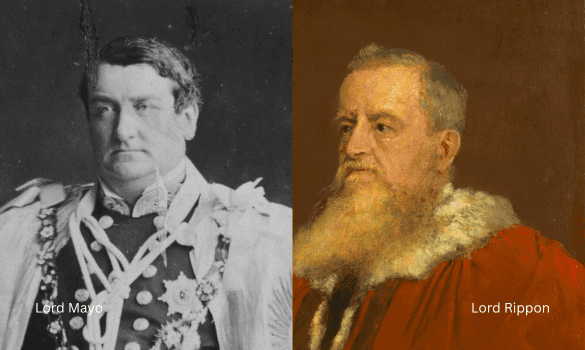
Lord Mayo's Resolution (1870):
This resolution introduced the concept of financial decentralization. It aimed to relieve the central government's financial pressure by transferring responsibility for certain local services, like sanitation and education, to provinces. It also encouraged the establishment of municipal committees.
Lord Ripon's Resolution (1882):
Often hailed as the "Father of Local Self-Government in India," Lord Ripon's resolution was a significant step towards institutionalizing local bodies. It aimed to provide political and popular education to Indians by increasing their participation in local governance. The resolution established non-official majorities in local bodies, with a provision for elected non-officials to chair them.
Royal Commission on Decentralisation (1907):
This commission highlighted the need for greater decentralization and recommended the revival of village panchayats. However, these recommendations were not fully implemented.
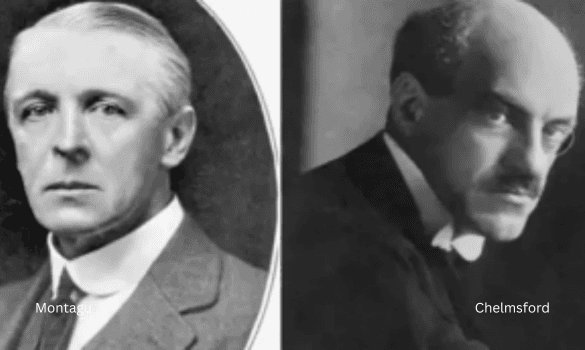
Government of India Act, 1919 (Montagu-Chelmsford Reforms):
This act made local self-government a "transferred subject," placing it under the control of Indian ministers. This marked a crucial phase in which local bodies gained a degree of autonomy from British officials.
Post-Independence Era:
The Search for a Cohesive System After independence, the need for a strong, decentralized system of local governance was widely recognized, as reflected in Article 40 of the Constitution, a Directive Principle of State Policy.
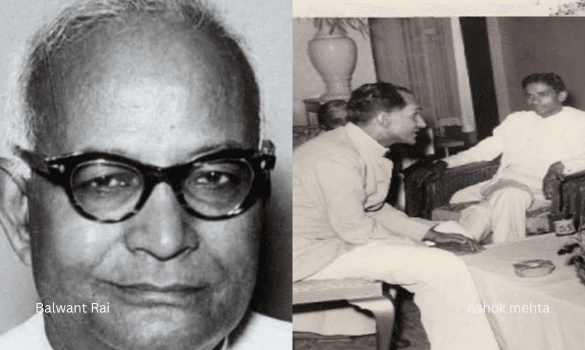
Balwant Rai Mehta Committee (1957):
This committee was appointed to study the Community Development Programme. It famously recommended a system of "democratic decentralization," which came to be known as Panchayati Raj. The committee proposed a three-tier structure: Gram Panchayat, Panchayat Samiti, and Zila Parishad, with elections and genuine transfer of power.
Ashok Mehta Committee (1977):
Following a period of decline and stagnation in PRIs, this committee was appointed to recommend measures to revitalize them. It suggested replacing the three-tier system with a two-tier structure and proposed that political parties should be officially involved in Panchayat elections.
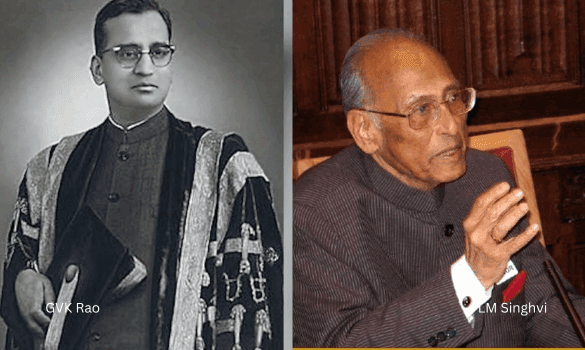
G.V.K. Rao Committee (1985):
This committee, recognizing that local bodies had become "grass without roots," recommended that the district should be the basic unit of planning and that regular elections were essential to rejuvenate the system.
L.M. Singhvi Committee (1986):
This committee gave the most significant recommendation: to grant constitutional status to Panchayati Raj Institutions. It also emphasized the importance of the Gram Sabha and recommended the establishment of judicial tribunals to resolve election disputes.
The recommendations of these committees, particularly the L.M. Singhvi Committee, laid the groundwork for the two constitutional amendments that followed.
The Constitutional Revolution of 1992
The decades of deliberation culminated in the 73rd and 74th Constitutional Amendment Acts of 1992, which fulfilled the long-standing demand for a constitutional framework for local self-government.
73rd Amendment:
This act gave constitutional status to Panchayati Raj Institutions, making a three-tier structure and five-year elections mandatory for states.
74th Amendment:
This act did the same for urban local bodies, providing a uniform framework for municipalities.
These acts transformed local bodies from being a mere administrative convenience into a fundamental, democratic third tier of governance in India..
Operation Polo – Integration of Hyderabad into India (1948)
Introduction
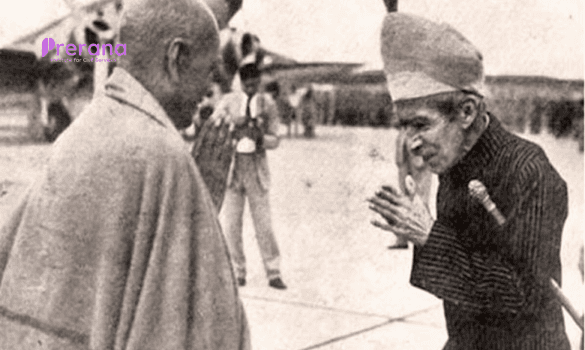
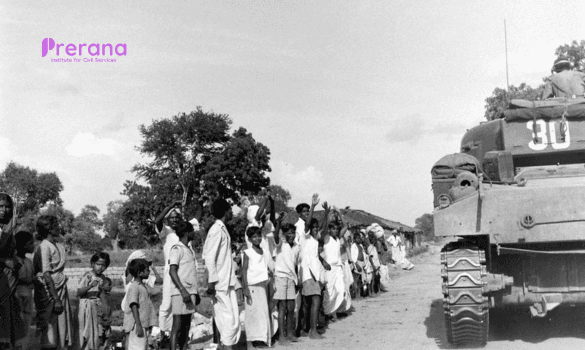
Operation Polo, also known as the Hyderabad Police Action, was a five-day military operation (13–17 September 1948) carried out by the Indian Army to annex the princely state of Hyderabad into the Indian Union.
Hyderabad, ruled by the Nizam Mir Osman Ali Khan, was one of the richest and largest princely states in 1947. However, its refusal to join India after independence created a major political, security, and communal challenge.
Background: Hyderabad at the Time of Independence
Princely State Status
*Hyderabad was the largest princely state (82,000 sq km; ~16.5 million population).
*Ruled by the Nizam (Asaf Jahi dynasty) with an autocratic system, though the majority (~85%) of the population was Hindu.
Nizam’s Stand After 1947
*While most princely states joined India or Pakistan, the Nizam wanted independence, supported by his *paramilitary force called the Razakars led by Qasim Razvi.
Hyderabad signed a Standstill Agreement (Nov 1947) with India, promising status quo for one year.
Issues Under the Standstill Agreement
*Law and order deteriorated: Razakars unleashed communal violence on Hindus.
*Hyderabad became a hub for conspiracies, seeking support from Pakistan.
*Reports of atrocities, land seizures, forced conversions, and communal clashes alarmed the Indian leadership.
Reasons for Operation Polo
*Security Threat: Hyderabad’s refusal endangered India’s internal security, especially in the Deccan.
*Communal Violence: Razakar atrocities against Hindus created a humanitarian crisis.
*Geopolitical Concerns: Fear that Hyderabad might join Pakistan, creating a hostile pocket in the heart of India.
*Failure of Negotiations: Diplomatic efforts by Sardar Patel and VP Menon failed as the Nizam kept delaying.
The Military Action (13–17 September 1948)
Code Name & Strategy
*The operation was named Operation Polo (unofficially called the “Police Action”).
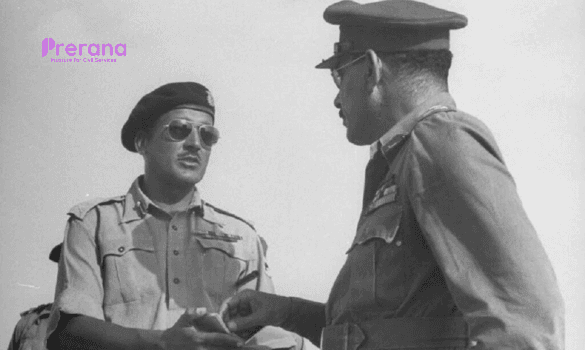
*Commanded by Major General J.N. Chaudhuri of the Indian Army.
*Around 40,000 Indian troops vs. ~24,000 Hyderabad forces and ~200,000 Razakars.
Course of Action
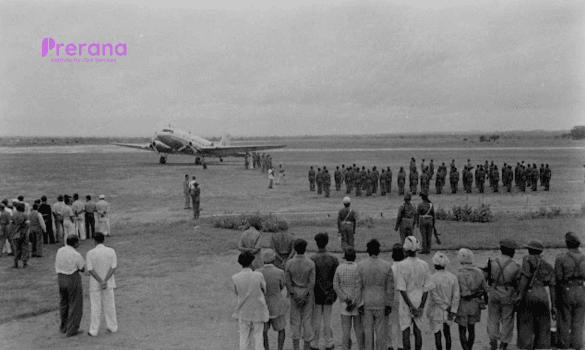
*13 Sept 1948: Indian Army entered Hyderabad from four directions.
*14–16 Sept: Key towns and airfields captured; Razakars collapsed quickly.
*17 Sept 1948: Nizam ordered surrender after realizing resistance was futile.
Casualties
*Hyderabad forces: ~1,500–2,000 killed.
*Indian Army: ~500 casualties.
*Civilian toll (including communal riots) was much higher.
Aftermath of Operation Polo
Accession to India
*The Nizam surrendered on 17 September 1948 and signed the Instrument of Accession.
*Hyderabad became part of the Indian Union as a centrally administered territory.
Nizam’s Position
*Nizam was retained as the Rajpramukh (Governor) of Hyderabad until 1956.
*His personal image remained intact, though Razakars were disbanded.
Communal Impact
*Post-operation saw communal violence, where thousands were killed.
*The Sunderlal Committee Report (1949) later documented widespread atrocities against Muslims in the aftermath.
Political Integration
*Hyderabad was merged into Andhra Pradesh (1956) after the States Reorganisation Act.
*Today, 17 September is celebrated as Hyderabad Liberation Day in parts of Telangana, Karnataka, and Maharashtra.
Significance of Operation Polo
*Strengthened Indian Unity: Eliminated a major threat to national integration.
*Showed Patel’s Leadership: Sardar Vallabhbhai Patel, the Iron Man of India, proved diplomacy + decisive action can integrate a diverse nation.
*Military Prestige: First major internal operation by the Indian Army, boosting its reputation.
*Communal Lessons: Highlighted the dangers of communal militias like the Razakars.
What's Unfolding in Nepal
Massive “Gen Z” Protests Erupt After Social Media Ban
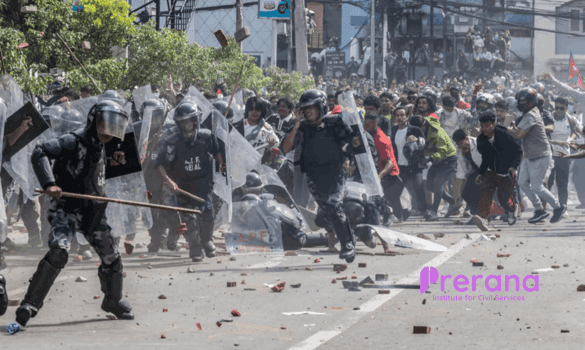
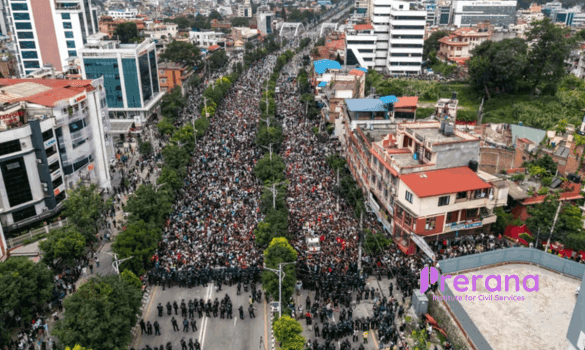
A sweeping ban on popular platforms—including Facebook, WhatsApp, Instagram, YouTube, and X—triggered widespread uproar. The government framed the restrictions as a response to non-compliance with registration requirements, but many decried it as censorship. Youth across the nation—mainly under the banner of “Gen Z”—launched fierce protests demanding not only restoration of access, but also action against corruption and favoritism.
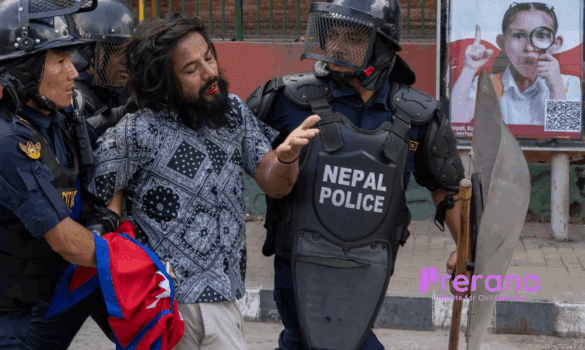
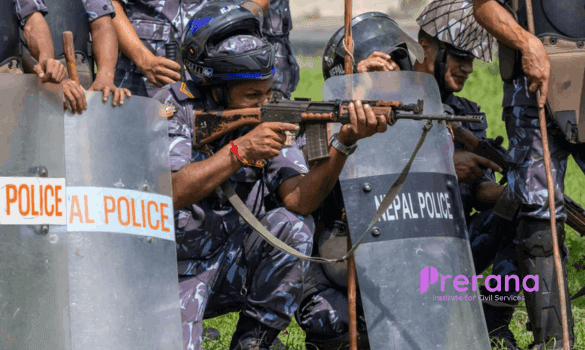
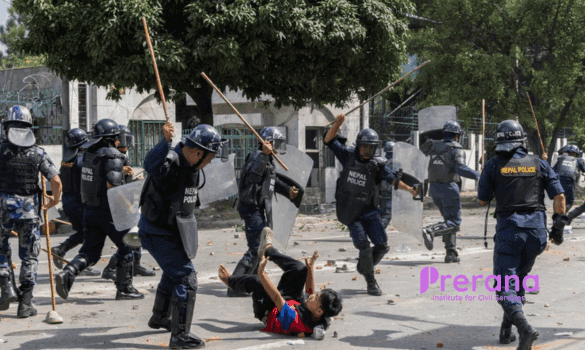
Violent Crackdown; At Least 19 People Killed
Security forces responded with force, and clashes turned deadly. Estimates put the death toll at 19, with over 100 injured. In Kathmandu, demonstrators stormed key government buildings, including the parliament, and set them ablaze. Homes of political figures—including former PM Oli—were also torched.
Move to Restore Order and Access
In response to the unrest:
The government lifted the social media ban, restoring access to affected platforms.
Curfews were imposed—indefinite in Kathmandu and temporary in nearby Lalitpur.
The PM announced compensation for affected families, free treatment for the injured, and formation of a 15-day investigation panel.
Prime Minister Resigns Amid Crisis
Prime Minister Khadga Prasad Sharma Oli resigned amid mounting anger. He will lead a caretaker administration and expressed sorrow over the casualties. Meanwhile, the President called for calm and dialogue, and the army urged restraint.
International Response & Travel Advisories
Foreign governments swiftly issued travel warnings: the UK and India advised their citizens to avoid travel to Nepal or stay indoors if already there. The Ministry of External Affairs (India) released helpline numbers and urged calm—similar advisories came from other nations.
Key Themes & Deeper Meaning
Beyond Social Media
The protests reflect deeper socio-political frustrations—not just about access to online platforms, but long-standing grievances over rampant corruption, lack of accountability, youth unemployment, and perceived elite privilege.
Curtailing Freedoms in South Asia
Nepal's crackdown on internet freedoms mirrors a broader trend across the region—exemplifying a global decline in digital rights. The reaction underscores the vitality of social media as forums for expression and organizing.
Looking Ahead
Although the social media ban can no longer be blamed for triggering unrest, the underlying tension persists. Calls for systemic reform, accountability, and representation are likely to continue. The investigation’s findings and follow-up actions in the coming days will be crucial in determining whether this moment becomes a turning point—or a simmering flashpoint—in Nepal’s political trajectory.
Revised GST slab rate (GST 2.0)
Key Shifts
Two-rate system: Most items now fall under 5% (essentials) or 18% (general goods & services). The earlier 12% and 28% brackets are gone.
Luxury slab: A new 40% rate is reserved for luxury cars, tobacco, aerated drinks, yachts, and private jets.
Big relief for households: Daily-use goods (packaged food, toothpaste, milk products), medicines, insurance premiums, and TVs have seen rate cuts. Some essentials are now tax-free.
Expected impact: Economists estimate this reform could shave 1% off retail inflation and fuel demand in FMCG, footwear, restaurants, grocery, and autos.
Why it Matters
For consumers: Lower prices in daily consumption.
For businesses: Simpler compliance, reduced slab confusion.
For the economy: Likely boost in spending ahead of the festive season.
Income Tax Changes – More Take-Home Pay
A new set of slab rates has been rolled out for FY 2025–26 under the “new tax regime.”
New Slabs
₹0 – 4 lakh: No tax
₹4 – 8 lakh: 5%
₹8 – 12 lakh: 10%
₹12 – 16 lakh: 15%
₹16 – 20 lakh: 20%
₹20 – 24 lakh: 25%
Above ₹24 lakh: 30%
Plus, the rebate limit is raised to ₹12 lakh (effectively zero tax till ₹12 lakh, or ₹12.75 lakh if you include standard deduction).
Why it Matters
Middle class gainers: More disposable income → higher consumption.
Tax simplicity: Wider slabs, fewer disputes, greater clarity.
Macro angle: Boosts demand-led growth while maintaining progressivity.
The New Income Tax Act, 2025
Beyond just slab tweaks, a new Income Tax Act has been passed — replacing the 1961 law. It will be effective from April 2026.
Shrinks the bulky 800+ sections to about 536.
Moves to a uniform Tax Year” (instead of “Previous” & “Assessment” years).
Builds in faceless assessments and digital-first administration.
Explicitly covers digital assets & modern income streams.
This is being pitched as a structural reform — aimed at transparency, efficiency, and reduced litigation.
Digital Taxation
The 6% equalisation levy on online ads has been scrapped (2025).
The earlier 2% e-commerce levy was also withdrawn.
Instead, India will rely on the Significant Economic Presence (SEP) framework — taxing global digital companies based on revenue or user footprint inside India.
This aligns India closer with global norms, while keeping scope to tax Big Tech fairly.
UPSC Angle
Prelims: New GST slab structure, slab rates in income tax, effective dates.
Mains (GS3): Impact of tax reforms on consumption, inflation, fiscal policy, and ease of doing business.
Essay / Ethics: “Simplification in taxation as a tool of social justice” could be a theme.
In one line: Lower tax on essentials, higher levy on luxury, simpler slabs for individuals, and a new law to modernize the tax ecosystem — India’s tax reforms aim to ease lives while nudging consumption-driven growth.

Shanghai Cooperation Organisation (SCO)
Why in News?
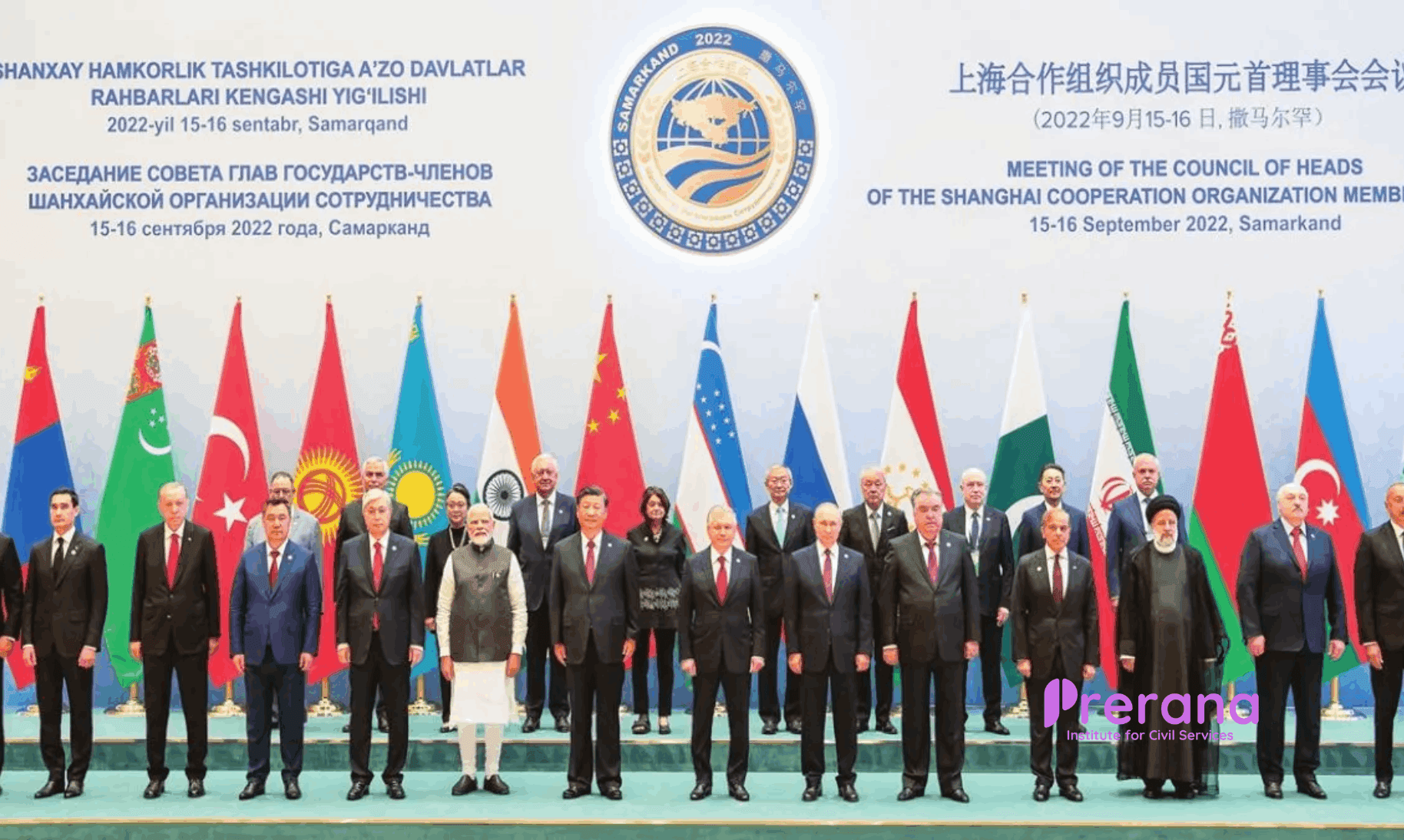
The 25th SCO Heads of State Summit is currently being held in Tianjin, China (Aug 31–Sep 1, 2025).
This is the largest SCO Summit ever, with leaders of China, India, Russia, Iran, Turkey, Belarus and others in attendance.
About SCO
Founded: 2001 (by China, Russia, Kazakhstan, Kyrgyzstan, Tajikistan, Uzbekistan).
Members (9): China, Russia, India, Pakistan, Kazakhstan, Kyrgyzstan, Tajikistan, Uzbekistan, Iran.
New entrant: Belarus (2024).
Headquarters: Beijing, China.
Main Pillars: Security cooperation, counter-terrorism, economic connectivity, cultural exchange.
Key Organ: Regional Anti-Terrorist Structure (RATS), Tashkent.
Significance of the SCO for India
India's full membership in the SCO since 2017 is a crucial component of its foreign policy.
Strategic Autonomy: The SCO provides a vital platform for India to pursue its multi-alignment strategy, balancing its relations with Western powers and the Eurasian bloc.
Regional Connectivity: The SCO allows India to push for regional connectivity projects like the International North-South Transport Corridor (INSTC), which is essential for accessing Central Asian markets and resources.
Counter-Terrorism: India actively participates in the RATS to combat terrorism and extremism in the region. At the 2025 summit, India emphasized the need for a unified response to cross-border terrorism, an issue that directly affects its security.
Economic Cooperation: The SCO provides a forum for India to engage in economic diplomacy, promote trade, and explore cooperation in emerging sectors like the digital and green economy.
Key Outcomes of the 2025 SCO Summit (Tianjin, China)
The 2025 summit was a landmark event, producing several significant outcomes:
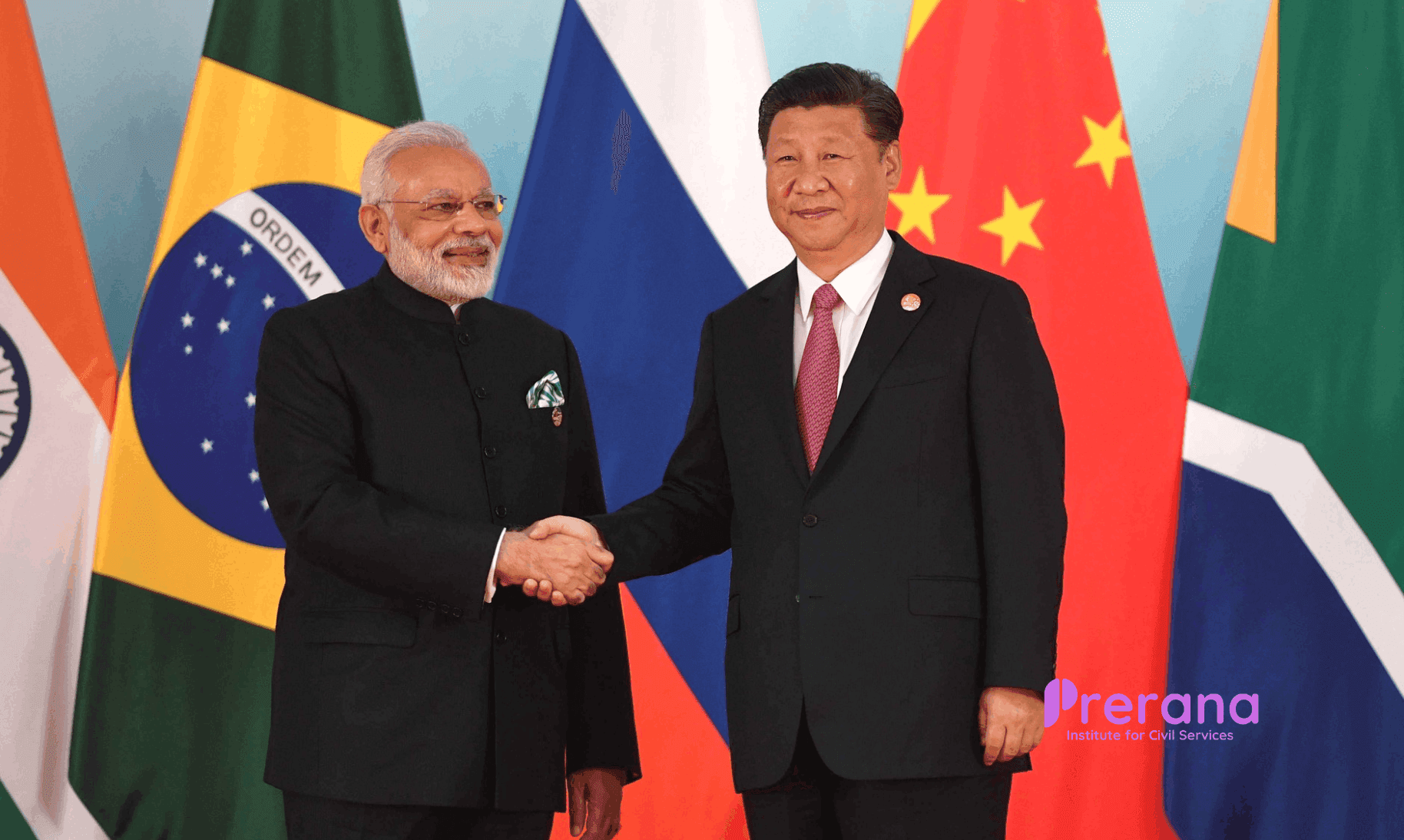
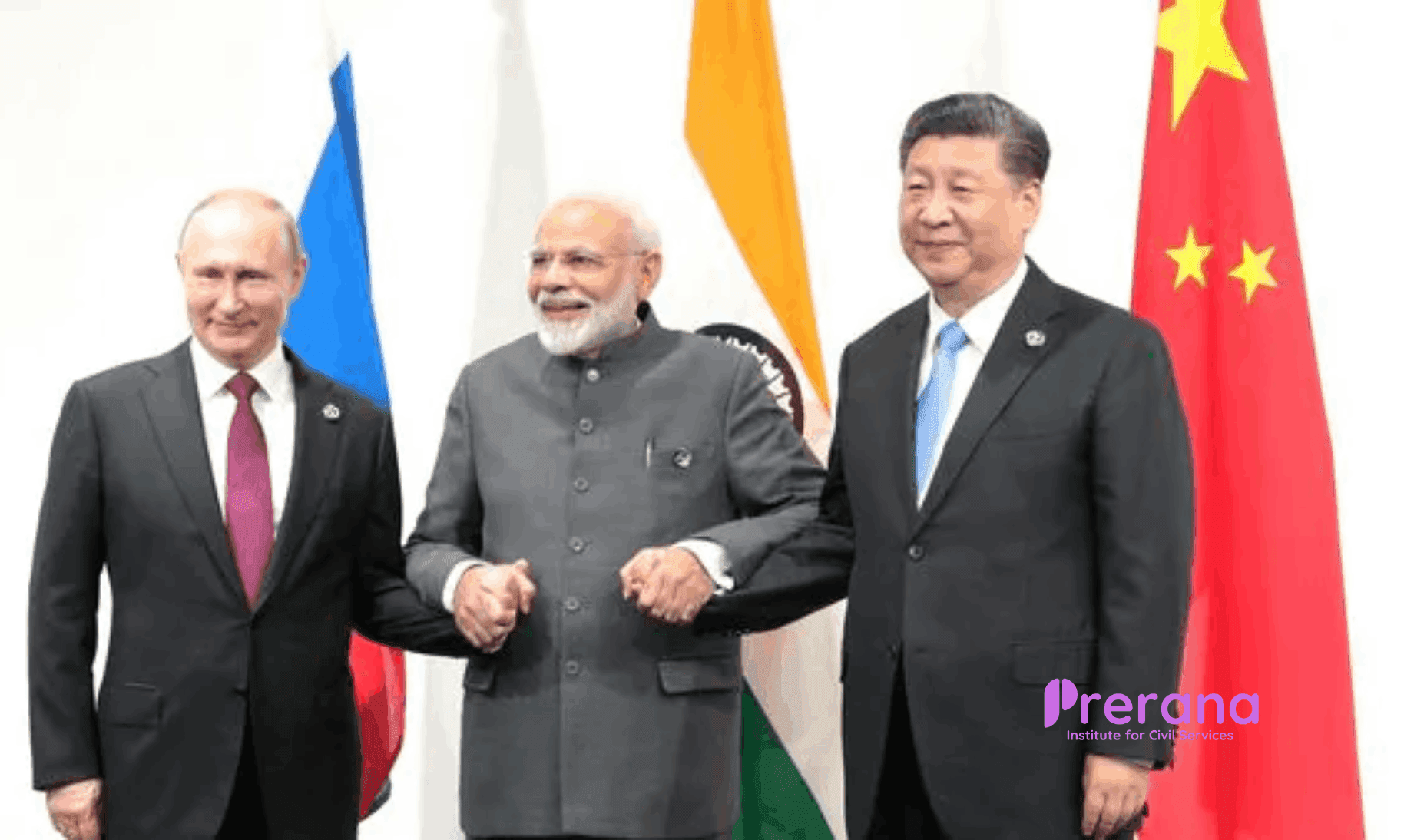
Modi-Xi Jinping Meeting: A key highlight was the bilateral meeting between PM Modi and President Xi, the first since the 2020 Galwan Valley clashes. Both leaders agreed to:
*Reaffirm their status as "development partners, not rivals."
*Maintain peace and tranquility along the border through existing mechanisms.
*Not allow the border issue to define the entire relationship.
*Address global challenges like terrorism and fair trade.
Economic and Trade Cooperation: In response to rising global protectionism, including tariffs from the US, member states discussed strengthening economic ties and promoting trade in national currencies to reduce reliance on the US dollar.
Strategic Alignment: The Tianjin Declaration was adopted, outlining a shared vision for deepening cooperation across security, economy, and culture. The SCO also announced a new Development Strategy for the Next Decade to guide the organization's efforts until 2035.
Multipolar World Order: Leaders reiterated their support for a multipolar world order based on international law and the UN Charter, positioning the SCO as a counterweight to unilateralism.
Challenges for the SCO
Diverse Interests: The diverse and sometimes conflicting interests of its members, especially the India-China and India-Pakistan rivalries, can impede decision-making.
Lack of Cohesion: While the SCO is a significant forum for dialogue, its effectiveness as a unified bloc is often limited by its consensus-based decision-making process.
China's Dominance: Some analysts express concern over China's increasing economic dominance and its potential to use the SCO to advance its Belt and Road Initiative (BRI), which India has not endorsed.
The 130th Constitutional Amendment Bill – Explained
Purpose of the Bill
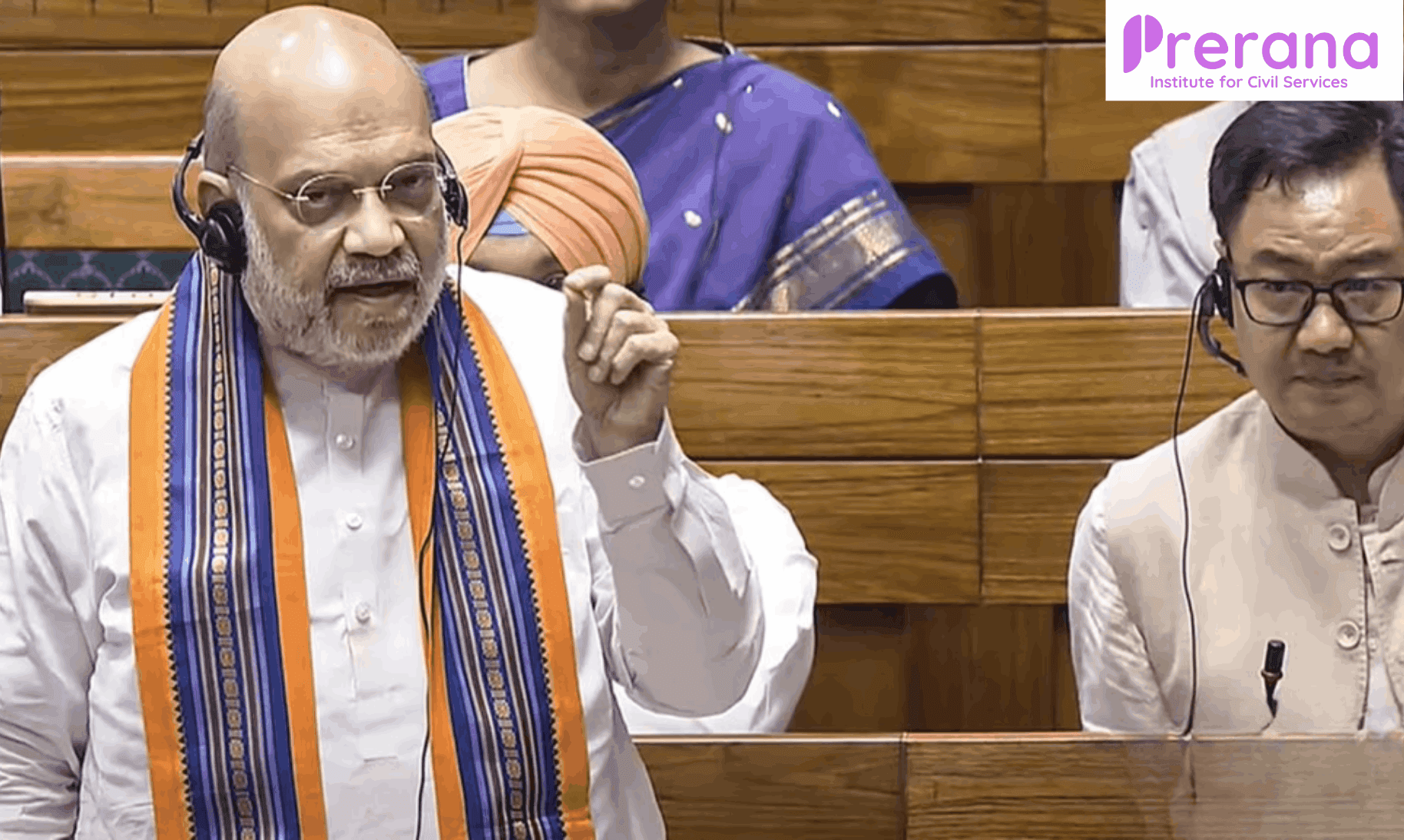
Introduced by the Union government to ensure that Ministers, Prime Ministers (PM), and Chief Ministers (CM) automatically lose office if detained in connection with serious criminal offences.
Key Provisions of the Bill
Constitutional Amendments Proposed
Amends Articles 75 and 164 (Council of Ministers at Union and State level).
Inserts provisions in Article 239AA (for Delhi’s Council of Ministers).
Similar amendments are also proposed for Union Territories of Jammu & Kashmir and Puducherry.
Conditions for Removal of Ministers
If a Minister is arrested and detained for 30 consecutive days in connection with an offence punishable with imprisonment of 5 years or more:
The PM/CM must advise removal.
If no advice is given, the Minister will automatically cease to hold office on the 31st day.
For the Prime Minister or Chief Minister
If the PM/CM is arrested and detained for 30 consecutive days, he/she must tender resignation on the 31st day.
Reappointment Clause
The PM, CM, or Minister who loses office under this provision can be reappointed after release from custody.
Procedure for Passage
Being a constitutional amendment, it requires a two-thirds majority in both Houses of Parliament.
The Bill has been referred to a Joint Parliamentary Committee (JPC) for scrutiny.
Existing Laws
Representation of the People Act, 1951 (RP Act):
A person convicted and sentenced to at least two years in jail is disqualified from being an MP/MLA during the sentence + 6 years thereafter.
Earlier, Section 8(4) allowed sitting MPs/MLAs to avoid disqualification if they filed an appeal, but this was struck down in Lily Thomas (2013).
Gap in Law: Current provisions only disqualify MPs/MLAs, not Ministers.
Election Commission (2016): Recommended barring candidates from contesting elections once charges are framed for offences with punishment of 5 years or more.
Concerns with the Bill
Premature Removal:
Elected representatives may lose office based on mere police detention, even before trial or conviction.
Threat to Parliamentary Democracy:
Undermines the PM/CM’s discretion to choose their Cabinet.
Possibility of Misuse:
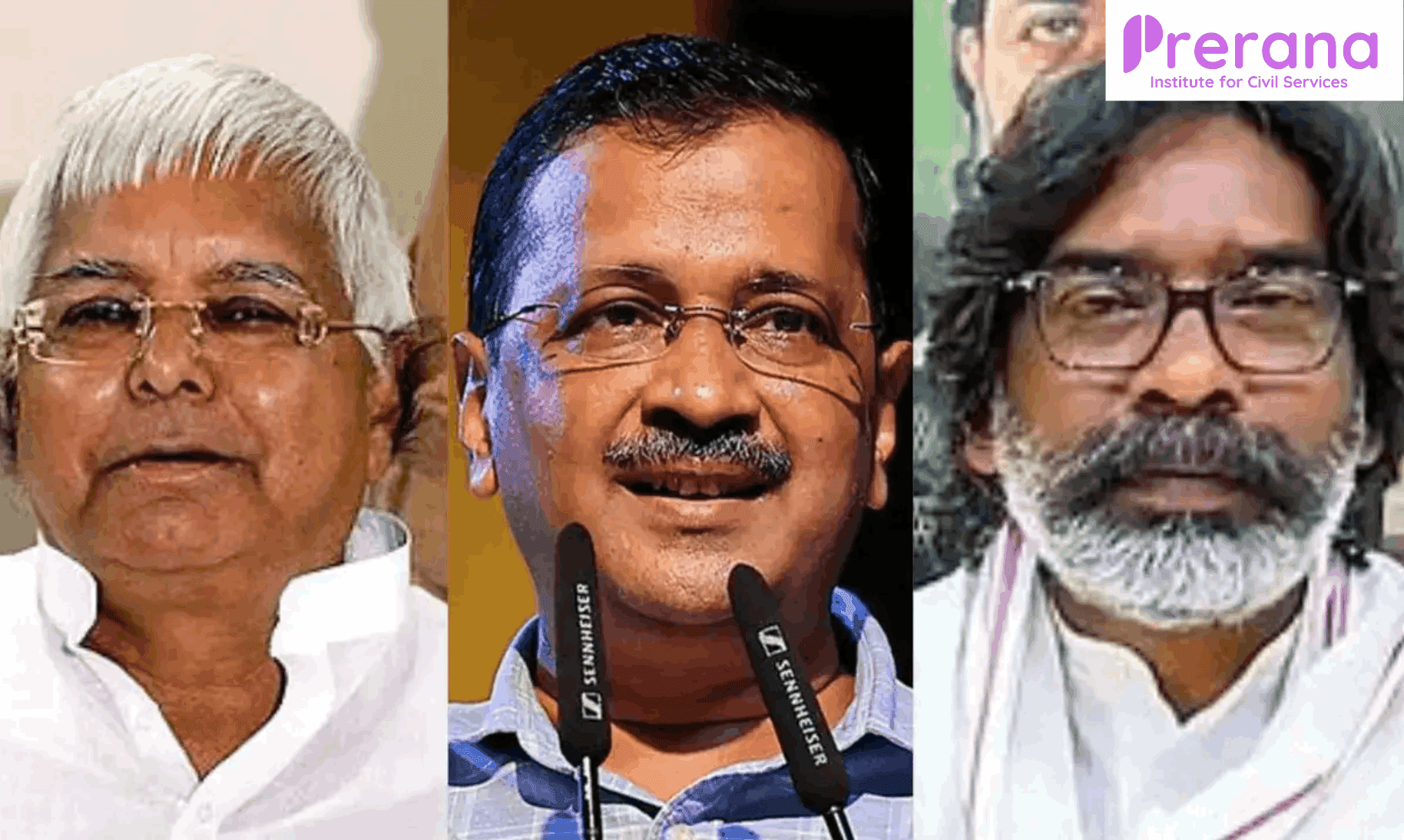
May give the Centre excessive power to target opposition-ruled States through politically motivated police actions.
Wider Context – Criminalisation of Politics
ADR Reports:
46% of MPs and 45% of MLAs face criminal cases.
Candidates with criminal records have a 15.4% chance of winning, compared to 4.4% for clean candidates.
The Bill addresses the effects (removal after detention), but not the cause (political parties fielding tainted candidates).
Suggested remedy: Parties must stop giving tickets to candidates with serious criminal cases, instead of relying on punitive removal later.
Who decides nominations to UT Assemblies?
The story so far:
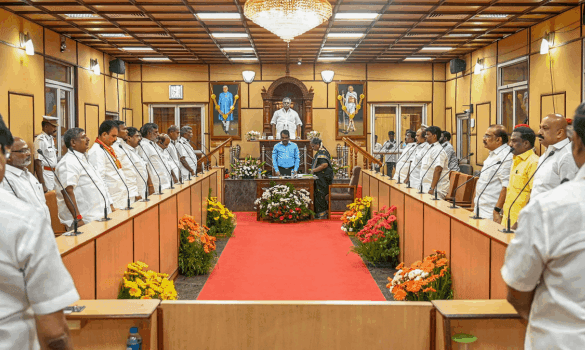
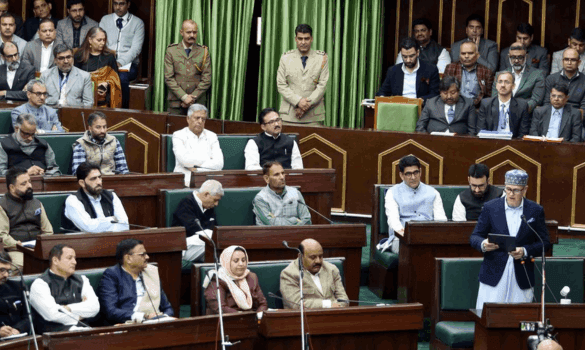
The Union Home Ministry has told the Jammu & Kashmir and Ladakh High Court that the Lieutenant Governor (LG) of J&K can nominate five members to its Legislative Assembly without requiring the aid and advice of the elected Council of Ministers. This has reignited the debate over how nominated members should be chosen in Union Territories (UTs).
What does the Constitution say about nominated members?
The Constitution allows nominated members in Parliament and State legislatures.
Until 2020, Anglo-Indian members could be nominated to the Lok Sabha and State Assemblies (discontinued since).
The Rajya Sabha has 12 nominated members, chosen by the President on the advice of the Union Cabinet.
In the six States with Legislative Councils, one-sixth of members are nominated by the Governor, again on ministerial advice.
How is it different for Union Territories?
The composition of UT Assemblies is decided by Acts of Parliament:
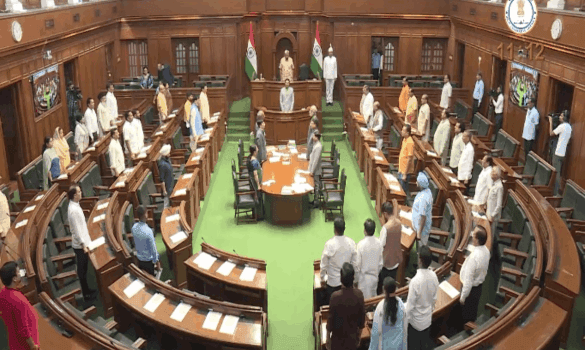
Delhi: Governed by the NCT Act, 1991. Has 70 elected members, no nominations.
Puducherry: Under the UT Act, 1963, has 30 elected members + up to 3 nominated by the Union government.
J&K: After reorganisation in 2019, has 90 elected seats. Sections 15–15B allow the LG to nominate 5 members (2 women, 2 Kashmiri migrants, 1 displaced person from Pakistan-occupied Kashmir).
What have courts ruled?
Puducherry case (2018): The Madras High Court upheld the Union government’s power to nominate members to the Puducherry Assembly without consulting the UT Council of Ministers. The Supreme Court later set aside additional recommendations made by the HC but left the main power untouched.
Delhi case (2023): The Supreme Court emphasised the “triple chain of command” — civil servants accountable to ministers → ministers accountable to the legislature → legislature accountable to the people. The Court held that the LG is generally bound by the elected Council of Ministers, except in areas where the Assembly has no legislative power.
Why does this matter?
Nominated MLAs can tilt the balance of power in small UT Assemblies like Puducherry or J&K, potentially converting a majority into a minority.
This is particularly significant when the Union and the UT are ruled by different parties.
In J&K, which was a full-fledged State until 2019, the issue is more sensitive. The Centre has promised to restore statehood “at the earliest.”
What should be done?
To uphold democratic accountability:
Nominations in UT Assemblies should ideally be based on the advice of the elected Council of Ministers, not unilaterally by the LG or Union government.
This ensures the spirit of democracy is preserved, avoids political manipulation, and respects the people’s mandate.
Why are Thailand and Cambodia fighting over a Hindu temple?
The Story So Far
Border tensions between Thailand and Cambodia have once again flared up. On July 24, 2025, Thailand launched airstrikes using F-16 jets on Cambodian military positions, prompting Cambodia to fire artillery and rockets into Thai civilian areas.
After five days of clashes that killed at least 43 people and displaced nearly 2.8 lakh civilians across both countries, a ceasefire was finally brokered by Malaysia on July 28. On August 7, the two sides agreed to deploy interim observer teams to monitor the fragile truce.
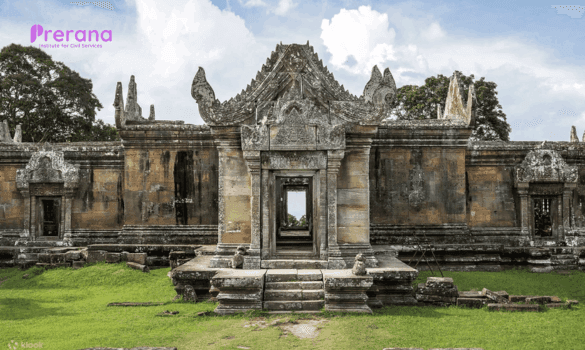
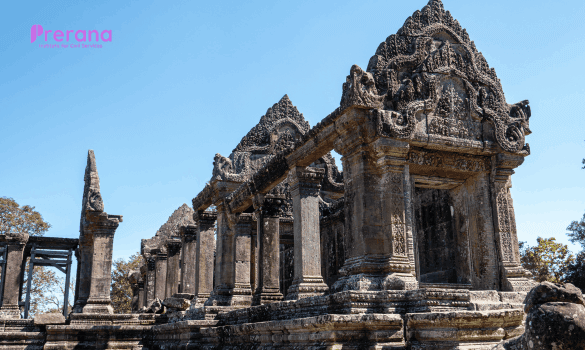
At the heart of this conflict lies the Preah Vihear temple — a centuries-old Hindu temple claimed by both nations.
What is the Preah Vihear Temple?
Location: Cliff-top site on the Thai–Cambodian border.
History: Built in the 11th century during the height of the Khmer Empire (builders of Angkor Wat).
Deity: Dedicated to Lord Shiva.
Features:
A chain of sanctuaries connected by an 800-metre system of pavements and staircases.
Famous for intricate stone carvings and adaptation to the natural cliff terrain.
Cultural Significance: Symbol of Khmer heritage, yet historically accessible more easily from Thailand.
Why is the Temple Disputed?
1794: Temple under Siamese (Thai) control.
1863: Cambodia becomes a French protectorate; Siam renounces claim over Cambodia.
1904–1907: French surveys map the temple on Cambodian territory, strengthening Cambodia’s claim. Thailand objected.
1954: Thailand occupies the temple after French withdrawal.
1959: Cambodia approaches the International Court of Justice (ICJ).
1962: ICJ rules that Cambodia holds sovereignty over Preah Vihear. Thailand withdraws but remains discontented.
Tension reignited in 2008 when the temple was added to the UNESCO World Heritage List under Cambodia’s nomination, sparking nationalist backlash in Thailand. Both sides claim sovereignty over the 4.6 sq. km area surrounding the temple.
Notable Clashes Over the Temple
2008: Armed skirmishes kill two Cambodian soldiers.
2011: Four-day artillery battle kills five; ICJ intervenes, calls for a demilitarised zone.
2013: ICJ reaffirms that the temple and its vicinity belong to Cambodia. Thailand refuses full troop withdrawal.
2025 flare-up: Triggered by landmine incidents, anthem-singing altercations, political leaks, and military escalations.
What Prompted the Recent Clashes?
Nationalistic Symbolism: Both sides view the temple as a matter of sovereignty and cultural pride.
Political Factors:
A leaked call between Thai PM Paetongtarn Shinawatra and Cambodian ex-PM Hun Sen stoked outrage in Thailand.
Shinawatra’s dismissal deepened political instability.
Border Militarisation: Troop build-ups, trade restrictions, and landmine injuries to Thai soldiers escalated tensions.
Retaliatory Strikes: Thai airstrikes on July 24 led to Cambodian artillery retaliation into Thai civilian zones.
Why Does This Conflict Persist?
Geographical Issue: Main temple in Cambodia, but entrance easier from Thailand.
Nationalist Politics: Leaders in both countries use the temple dispute to rally domestic support.
Legal vs. Practical Control: ICJ rulings favour Cambodia, but Thai troops remain near disputed land.
Economic Factor: The temple is a tourist site, giving both countries economic and cultural stakes.
Way Forward
Enforcing ICJ Rulings → Respect sovereignty verdicts.
ASEAN Mediation → Regional body must sustain ceasefire monitoring.
Joint Heritage Management → Temple can be managed as a shared cultural site under UNESCO.
Demilitarisation & Border Agreements → Reduce troop presence and establish neutral buffer zones.
In Summary
The Preah Vihear temple dispute shows how ancient cultural heritage can become a flashpoint for modern geopolitics. Despite repeated ICJ rulings, nationalist politics and unresolved border demarcations continue to fuel conflict. Only regional diplomacy, demilitarisation, and joint management can transform this contested site into a symbol of cooperation rather than conflict.
Exam Connect:
GS1 (History & Culture): Khmer Empire, Angkor Wat, Preah Vihear temple.
GS2 (International Relations): ICJ rulings, ASEAN mediation, India’s look-east diplomacy (contextual).
GS3 (Security): Border disputes, nationalism, refugee displacement.

What are the new rules on chemically contaminated sites?
The Story So Far
India has long struggled with chemical contamination of land, groundwater, and surface water, stemming from past industrial activities and poor hazardous waste management. Until now, there was no legal structure specifically for identifying, assessing, and remediating such contaminated sites.
On July 25, 2025, the Environment Ministry notified the Environment Protection (Management of Contaminated Sites) Rules, 2025 under the Environment Protection Act. These rules finally establish a legal process for handling contaminated sites across the country.
What are Contaminated Sites?
According to the Central Pollution Control Board (CPCB):
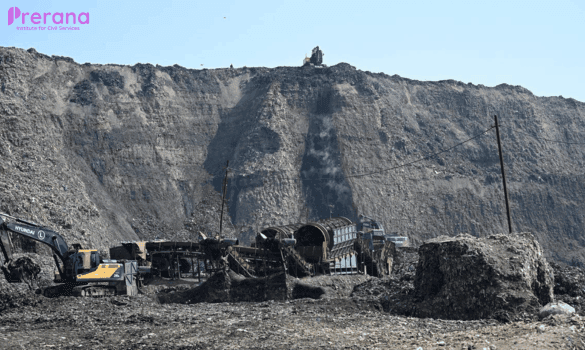
These are places where hazardous or other wastes were dumped historically.
They pose risks to soil, groundwater, surface water, human health, and the environment.
Examples:
Landfills
Dumps
Waste storage and treatment sites
Spill-sites
Chemical waste handling/storage sites
Current status:
103 contaminated sites identified across India.
Remediation started at only 7 sites.
Remediation = cleaning soil, groundwater, surface water, and sediments using appropriate technologies.
Why were the Rules Necessary?
Back in 2010, the Environment Ministry launched the Capacity Building Program for Industrial Pollution Management Project to prepare for large-scale remediation. Its three tasks were:
Inventory → Identify probable contaminated sites.
Guidelines → Prepare documents for assessment and remediation.
Framework → Develop a legal, institutional, and financial structure for remediation.
The first two were done.
The legal codification was missing — until these 2025 Rules.
What Do the New Rules Provide?
Step 1: Identification
District administration → must submit half-yearly reports on suspected contaminated sites.
Step 2: Preliminary Assessment
Conducted by the State Pollution Control Board (SPCB) or a designated reference organisation.
Timeline: 90 days from notification.
Step 3: Detailed Survey
Must be completed within the next 3 months.
Checks for hazardous chemical levels (189 listed under Hazardous & Other Wastes Rules, 2016).
Step 4: Public Disclosure
If contamination exceeds safe limits → site location publicised.
Restrictions placed on accessing the site.
Step 5: Remediation Plan
Reference organisation (expert body) drafts a remediation plan.
Step 6: Fixing Responsibility
SPCB has 90 days to identify responsible parties.
Responsible polluters must bear clean-up costs.
If not possible → Centre/State governments bear costs.
Step 7: Liability
If contamination caused loss of life or damage → criminal liability under the Bharatiya Nyaya Sanhita, 2023.
Exemptions from the Rules
The following are not covered under these rules, as separate laws already govern them:
Radioactive waste
Mining operations
Marine oil pollution
Solid waste from dump sites
Key Gap: No fixed timeline to ensure sites, once identified, are restored to safe levels. This remains a major omission.
Challenges Ahead
Slow remediation record: Only 7 out of 103 sites addressed so far.
Institutional capacity: Reference organisations and SPCBs may lack manpower/expertise.
Financial burden: Many polluters have shut down, leaving cleanup costs to government.
Coordination gaps: Between district, state, and central authorities.
Timeline issue: No deadline for complete remediation = risk of delays.
The Way Forward
Strengthen monitoring, reporting, verification frameworks.
Build financial mechanisms (polluter-pays, escrow funds, CSR contributions).
Develop technical capacity in SPCBs and local governments.
Integrate contaminated site management into urban planning and public health strategies.
Set clear timelines for remediation to avoid indefinite delays.
In Summary
The 2025 Rules fill a long-pending legal gap in India’s environmental governance by creating a step-by-step process to identify and clean up chemically contaminated sites. However, without strict timelines, adequate funding, and capacity building, implementation risks being slow.
What is the potential of Biochar?
The Story So Far
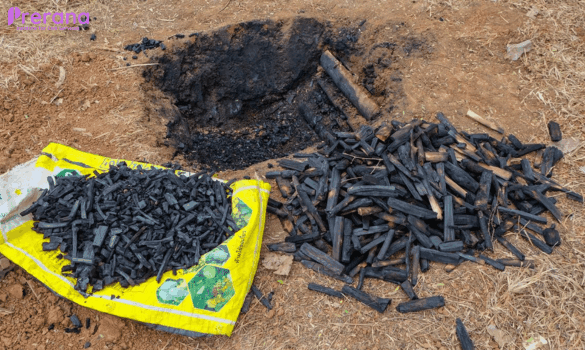
With India set to launch its carbon market in 2026, technologies that can remove carbon dioxide are gaining attention. One such solution is biochar — a form of charcoal made from agricultural residue and organic municipal waste. It not only helps manage waste but also locks carbon in the soil for hundreds of years, offering a pathway for negative emissions.
What is Biochar’s Potential?
India’s waste challenge: 600+ million tonnes of agricultural residue + 60+ million tonnes of solid waste generated annually.
If 30-50% is used:
15–26 million tonnes of biochar can be produced.
0.1 gigatonnes of CO₂ equivalent can be removed each year.
Byproducts of production:
Syngas (20–30 MT): Can generate 8–13 TWh power → replaces 0.4–0.7 MT coal annually.
Bio-oil (24–40 MT): Can offset 12–19 MT of diesel/kerosene → reduces crude imports & cuts >2% of fossil fuel emissions.
Biochar as a Carbon Sink
Long-term storage: Retains carbon in soil for 100–1,000 years.
In agriculture:
Improves soil water retention.
Cuts nitrous oxide emissions by 30–50% (273× stronger than CO₂).
Restores degraded soils.
In industry:
Adsorbs CO₂ from industrial exhausts.
In construction:
2–5% biochar in concrete = stronger, heat-resistant, locks 115 kg CO₂/m³.
In wastewater treatment:
1 kg biochar treats 200–500 L water.
Demand potential: 2.5–6.3 MT annually.
Challenges in Adoption
Carbon credit gap: No standardised markets or accounting methods.
Limited awareness & policy support.
Technology & market uncertainties.
Weak monitoring and verification frameworks.
Lack of viable business models.
The Way Forward
Develop feedstock standards for different regions.
Integrate biochar into crop residue management & bioenergy policies.
Recognise biochar in India’s carbon market for credits.
Promote village-level production units → ~5.2 lakh rural jobs.
Highlight co-benefits:
10–20% less fertilizer use.
10–25% higher crop yields.
In Summary
Biochar is not a magic bullet, but it is a science-backed, multi-sectoral solution. With the right policy support, market mechanisms, and awareness, it can help India achieve both its climate goals and development objectives.